
Dear Manvir,
I really enjoyed your dissertation defense! I thought of a potential hole in your argument but didn’t want to embarrass you in front of your mom. The hole is as follows: what about the possibility of the existence of magic? That the shamans are indeed affected by nether spirits?
Best, Josh
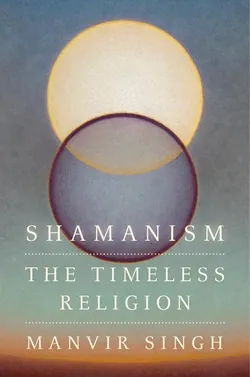
Manvir Singh’s book, Shamanism, is an achievement. He approaches the topic as an anthropologist, but shapes his argument with enough detail and tact that it is approachable to the non-academic.
In brief, Singh advocates that convergent cultural evolution is a better framework for understanding Shamanism than historical diffusionism. Historical diffusionism is the idea that something originated in some place at some point and spread out. Christianity and Islam, for example, are both religions that are better understood through a historical diffusionist lens, although “monotheism” as a category is less clear. Convergent cultural evolution, on the other hand, requires that we see a tradition not as spreading, but as having many difference sources. Over time, cultures develop towards each other without requiring contact.
So, for thinker Mircea Eliade (who was an advocate of historical diffusionism), Shamanism originally originated in Siberia and gradually spread throughout the world. For Singh, Shamanism is a type of spiritual practice shared by multiple different societies.
Singh’s thinking here is really interesting and, like Eliade, he outlines a few core features that define Shamanism:
- Shamans experience non-ordinary states. These states might be trance, ecstasy, or various other states of altered consciousness, and a lot of attention has been given to the use of psychedelics, although it is far from the only way to reach them.
- Shamans engage with unseen realities
- Shamans provide service like healing and divination
While Singh pushes against the idea that these unseen realities are literally true (hence, his friend Josh’s email, cited at the beginning of this review), he does rightly point out that the sorts of storytelling that shamans offer work to immense therapeutic benefit.
Also important to Singh’s perspective is his conceptualization of “xenization.” While we normal people can theoretically help others through what psychotherapists like Viktor Frankl call “logotherapy”–weaving together threads that give meaning to past experience–there is also immense benefit in the process that shamans do to other themselves. They become divine, they force themselves to suffer, they face taboos that normal people do not.
Singh’s concept of xenization makes sense in light of what other people do to make themselves appear “abnormal” and therefore greater. In the second half of the book, Singh provides numerous stories of peoples–both past and present–who can be understood as shamans. One chapter is about hedge fund managers and CEOs, who often go through their own xenization–although Singh correctly points out that they would not fall under his own criteria of a shaman. Money managers, for instance, often stumble upon unimaginable wealth, simply because people believe in them. In truth, random chance is more successful at raising revenue than trusting finance bros.
There is also an interesting chapter on Neo-Shamanism, which unites shamanic belief systems (homogenized and packaged for Western consumption) with psychotherapeutic mind and feelings talk. Admitting that Neo-Shamanism is sometimes dismissed as a phenomenon that whitewashes indigenous practices, Singh asserts that it still is Shamanism. While most traditional shamans emphasize physiological healing, the craze over mental health is important to we moderns (and not just Westerners), and people do benefit from Neo-Shamanism. After all, it is a repackaging of a universal human practice.
Singh’s afterword was especially illuminating to me, as he brings forth the contention that anthropologists face when they discuss universalism and comparative work. After all, was it not people who claimed to be universalist that led to atrocities like colonialism? “Yes, it was,” Singh retorts, “but these were groups who believed themselves to be the global norm, while the ‘other’ fell outside of it.” True, but who is to identify what the norm is? Might the criterion of “universal” not simply be a reflection of how we see the world? There are no easy answers here (or perhaps no answers at all), but Singh provides a defense of universalism, and I found it reasonable enough. Certainly, there is a stronger case here than nativism or xenophobia, which anti-universalism often devolves into.
Together, Manvir Singh’s Shamanism is a learned and insightful examination of Shamanism as a global (and timeless) religious phenomenon. There is plenty here to argue with, but Singh’s arguments were convincing enough for me, and I think that it is a great starting point for the general reader looking for something more rigorous than what they’ll find in the New Age Spirituality section of their local bookstore.