
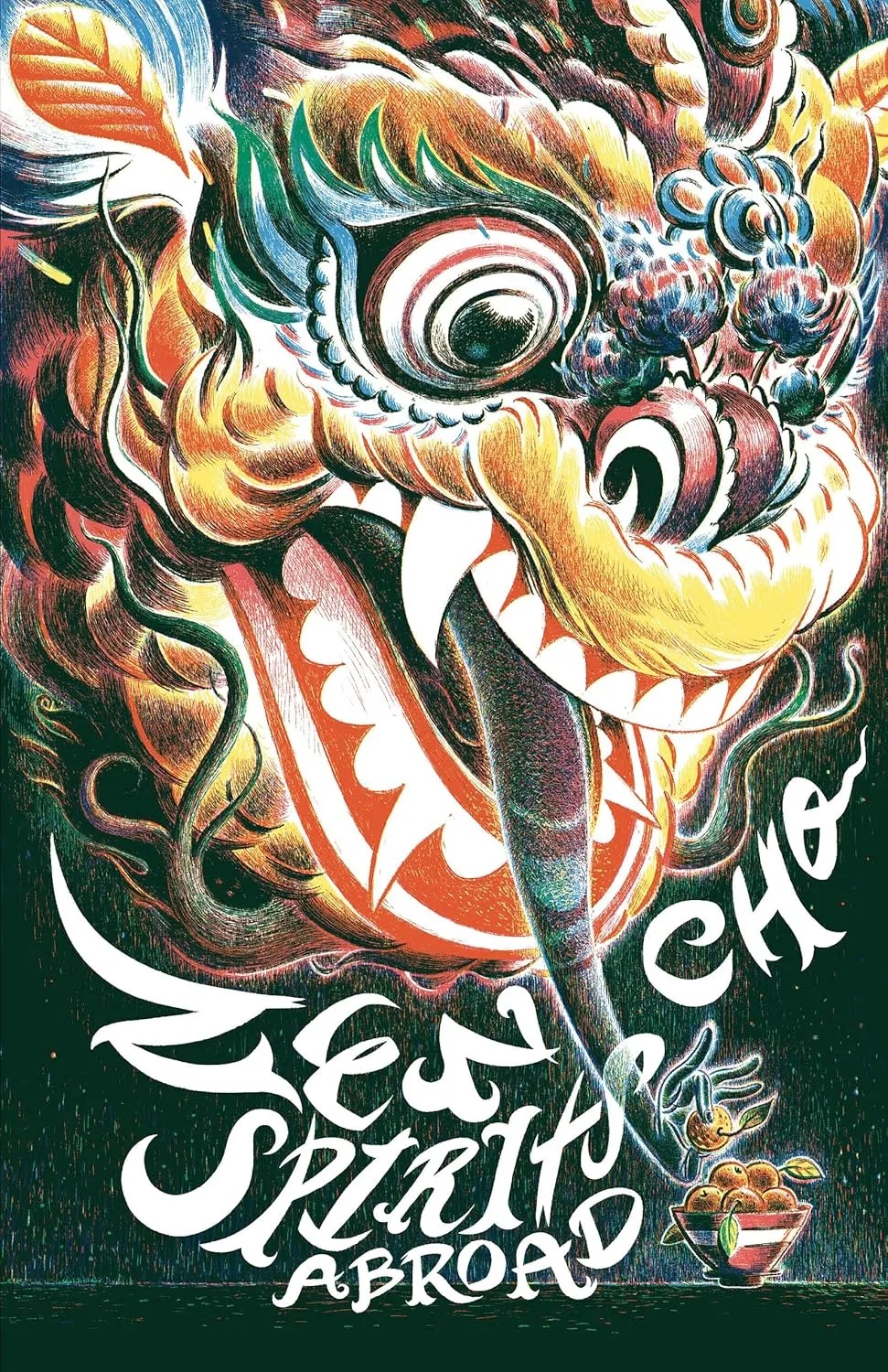
What a charming, beautiful collection of short stories! My version of Spirits Abroad is the enlarged and re-released version from 2021. The collection was initially published in 2015, but there are numerous stories here that weren’t included in the first version, so your mileage may vary based on which version you picked up.
I’m not sure whether Cho falls better under the category of “Magical Realism” or “Fantasy.” Whichever it is, she does fascinating work here. Most, if not all, of the stories in this collection come from a specifically Chinese-Malay perspective. Taoism, Islam, Buddhism, and indigenous southeast Asian traditions converge and blend, offering a stunning kaleidoscope of fantastical elements. More still, approximately a third of the stories deal, to some degree or another, with the experience of migration from Malaysia to the United Kingdom, adding further depth to an already-multidimensional set of stories.
My favorite of the stories is “If at First You Don’t Succeed, Try, Try Again,” which tells follows an imugi named Byam who wishes to become a dragon. However, each time it tries–a thousand years apart–its attempts are foiled (ostensibly by humans, but more likely from the way that he tries to become a dragon). After its third attempt, it unexpectedly assimilates into human society and learns what it means to live in the present moment.
Other stories deal with complicated family dynamics: the first story follows a young woman whose grandmother is a witch, and whose sister is following in her grandmother’s footsteps. Another story follows a vampire family–another young woman who died in childbirth and is taken care of by her undead aunties.
The stories are unapologetically female, and many deal with the dynamics of living as a lesbian in a conservative society. Others still deal with ethnicity, immigration, the experience of being “other”–whether the character experiences an interior othering, or if its imposed on her from the outside society depends wholly on the individual story.
The most fascinating part of the book, but also the most challenging for me, was the final third, which entirely takes place in magical worlds. One highlight follows Sun Wukong, the Monkey King from Journey to the West, which I found much more digestible than some of the other tales in the collection.
Many of the stories were hard for me, there are many layers of cultural content that I’m unfamiliar with, but this didn’t detract from Cho’s stories. Should a reader spend enough time in Cho’s worlds, it is possible to live and breathe it, although some working knowledge of Malaysian and Chinese story is advisable for those seeking out paths of least resistance.
In conclusion, Zen Cho’s Spirits Abroad provides marvelous, fantastical short stories that speak to the depths of the human experience. The collection is literature at its best, and it will be of special interest to those curious about non-Western spiritual traditions.