
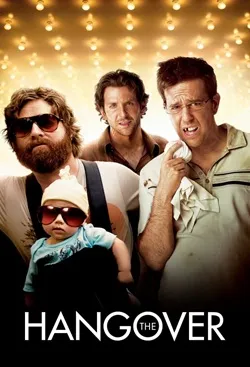
I watched The Hangover for the first time when I was 14. I also watched it three more times that year. I haven’t watched it since. My brother, on Thanksgiving Eve, inexplicably chose this movie for my family to watch together. I began watching it with suspicion, and I was pleased to see that it still worked after all this time.
Let me be clear: The Hangover has absolutely no artistic merit. It is merely a wild fever dream that has one goal in mind: to entertain, and entertain it does.
Unlike so many films that are ostensibly marketed towards middle schoolers in spite of being rated “R,” The Hangover does not fall back on sex jokes and tired cliches. Instead, it is an absurd, surreal fever dream of a film: Mike Tyson’s tiger, a mattress on the rooftop of Caesar’s palace, a crying infant, a missing tooth, a run-in with the Yakuza, and a wristband from a local hospital–these are the clues that the protagonists have to work with as they try to piece together the events of a Las Vegas bachelor party.
Easily the most sympathetic character was Alan (Zach Galifianakis), but it was also a pleasure to see Stu (Ed Helms) develop a backbone as the film progressed.
That said, the male gaze is central to the film. I’m not sure that this is entirely avoidable, given that we observe a few “bros” make their way through Las Vegas, wreaking havoc. Such a perspective is absolutely consistent, but it does make the film difficult to watch at times. Rather than critiquing such perspectives, the film leans into them. This might have worked for 2009, but it’s nice to think that we have changed our perspective in 2025 (although I don’t think we really have).
In the same vein, racial stereotypes do appear at two major moments in the film: both connected to interactions with the Yakuza. I like to think that these wouldn’t “fly” in the current film market, but–given the changes in American politics lately–I’m not entirely convinced that this is true.
In short, this is a popcorn movie all the way through, and if it’s understood as “entertainment,” it succeeds. However, any attempt to read it as “art” will fall through.